Two inclusion experts explain why unlocking growth means changing the systems these women rely on.
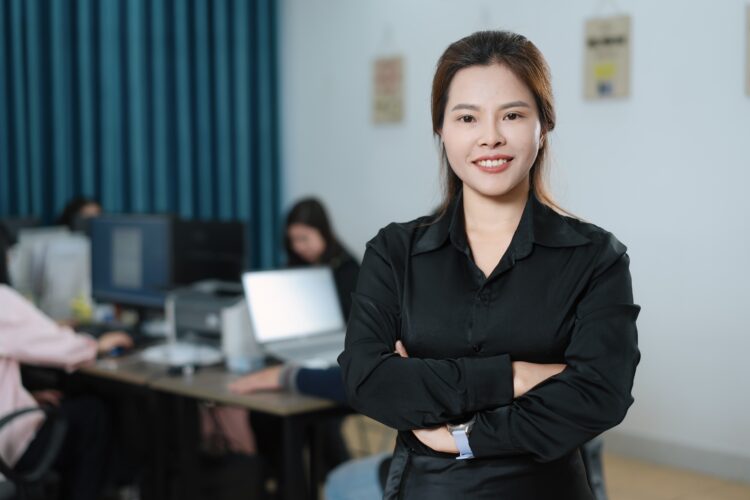
Eight years after leaving Venezuela in search of a better life for her and her daughter, Fabiola Gonzales was building a business in Lima one step at a time — reinvesting every sol, learning the market, and selling sportswear from a patch of pavement in the city’s garment district, where she worked as a store manager. What she didn’t have was access to formal credit. Like millions of women entrepreneurs, her business had potential, but the financial system had no place for her.
That changed when Financiera Confianza extended her first loan through its Emprendiendo Mujer loan program, developed as part of Strive Women, a Mastercard Strive program led by CARE, the international humanitarian and development organization. The loan was small, but it opened the door to something larger: a pathway into the formal financial system. Today, her business has a store, employees and customers across Peru — growth that would have been difficult, if not impossible, without the right combination of financing, training and support.
Stories like Gonzales’s sit at the center of a long-running partnership between CARE and the Mastercard Center for Inclusive Growth, focused on expanding opportunity for women entrepreneurs. Since 2020, the partnership has helped open up more than $700 million in financing globally, including more than $500 million through Strive Women alone.
Ahead of the United Nations’ International Micro-, Small and Medium-Sized Enterprises Day June 27, Michelle Nunn, president and CEO of CARE, and Shamina Singh, founder and president of the Center, discuss what it takes to move beyond access to lasting impact — and why building systems, not just providing capital, is key to scaling opportunity.
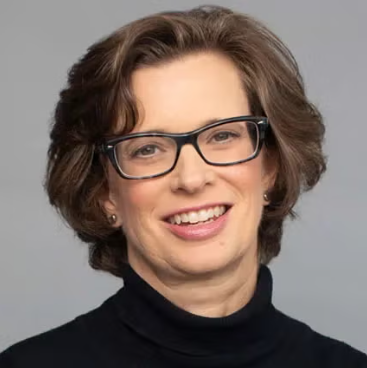
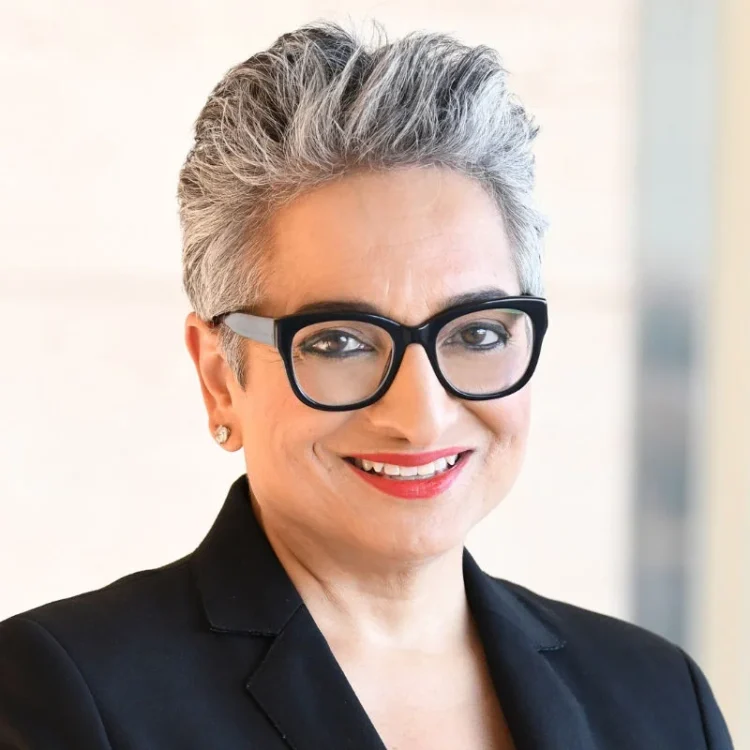
Michelle Nunn of CARE, left, and Shamina Singh of the Mastercard Center for Inclusive Growth
Since 2019, CARE and the Center have invested $14.26 million to support women entrepreneurs across Pakistan, Peru, and Vietnam. Why not simply give that money directly to entrepreneurs?
Nunn: We are really both invested in the most sustainable catalytic and scaled solutions. And despite the fact that cash can be an important way of moving forward, what we’ve found, in terms of families and communities, is that it can be exponentially more impactful when we invest in the capacity to change systems and support infrastructure that will last over time.
We’ve translated the almost $15 million of investment from Mastercard into almost $750 million in loans. That’s nearly a 50-times increment of change. And it’s evergreen because those institutions that we’ve been working with in Peru, Pakistan and Vietnam have an opportunity now to invest more into women entrepreneurs, and that will propel even greater possible change as we move forward.
Singh: We’re investing in expanding access to financial capital, but this is also breaking down structural barriers, and that requires investment in all parts of the system. Lending is one part of it, but it also requires investment in the training, in the technology, in the digitization. This program is about three things: It’s about opening up capital, it’s about going digital, and it’s about gaining access to networks and know-how. So the investment has been structured in such a way to focus on all three. And by all measures, I think we have exceeded all expectations.
Strive Women reaches entrepreneurs who have largely been left out of formal financial systems. What does it take to change that, and what kind of local partners make it possible?
Nunn: One example of what it takes is in Peru, where we’ve worked together with Financiera Confianza to help them redesign their loan program to get rid of the credit history requirement and use references as an alternative. That unlocked over $70 million worth of loans reaching over 80,000 entrepreneurs. That was a block, an unintentional block perhaps, but a block standing in the way of women having the ability to receive the credit they were worthy of in terms of their potential and their capacity and their experience.
I think what we have found is that when we can take a women-centered design approach, we can create financial products that are more accessible and more affordable and that really makes sense in terms of the day-to-day lives of these women entrepreneurs.
Singh: Women have massive social networks, and so women are able to vouch for each other in terms of their ability to pay back. It’s hard to do that when the law requires a male co-signer for a loan, right? So one of the things that we did in Pakistan was to allow women to vouch for each other on loan and lending and deepened uses of an alternative form of collateral gold. In places like Pakistan, women do have gold as part of their marriage, as part of growing up, so that’s a hard piece of collateral that banks can use as a lending tool.
And finding the local partners to make this possible — this is a great example of putting the assets of two fantastically powerful organizations together. The global network of Mastercard reaches 210 markets with 3 billion cards. CARE similarly has a global network of organizations that have the ability to go deep with local organizations like chambers of commerce, women’s chambers of commerce, these support organizations that are vital to the success of women’s entrepreneurs. This shows how we’ve leveraged our networks and our global reach to deliver local impact together.
Globally, small businesses are the backbone of most economies, yet the gaps in access to finance and support remain vast. Why does this work matter so much right now, and what is your future vision for CARE and the Center? What needs to happen for these bespoke partnerships to scale?
Singh: Last year, we met our commitment to bring 1 billion people into the formal financial economy, and CARE was one of our partners on that journey. We recently re-upped our commitment to connect and protect 500 million people and small businesses on their pathways to financial health by 2030. There are so many women who now have access to the formal system. They now have access to the digital system. They now have access to capital. What they need now is the bridge to make that journey from inclusion to security to health.
That’s the work that has to be done now. I’ll just give you one example. In Vietnam, we worked with VPBank to tailor bundled products and services for the working realities of women entrepreneurs — a Mastercard credit card offering practical working capital, alongside larger loans, streamlined processes and digital tools that match how businesses actually operate.
This is the commercially sustainable social impact that we talk so much about. It’s one thing to get into the system and get training and get access to capital, and it’s another thing to start that journey of usage and security and health. And with Vietnam, nearly 10,000 women entrepreneurs took up the tailored product bundle and mobilized over $400 million in capital for them.
This partnership has shown me that we have to think bigger. Let’s make sure we’re targeting all levels of small business owners and meeting them where they are and increasing their business.
Nunn: I don’t think you have to look very, very hard into the latest news to think about how important this kind of work is. We have growing inequities. We have increasing fragility. We have an enormous gap, trillions of dollars worth of gap, in terms of the capacity for micro, small and medium enterprises to receive and absorb and employ and grow. And we certainly can see the inequities for women entrepreneurs and the sheer human potential of what could be realized when there is more capacity for financing and capital.
And so you have this enormous set of needs, and you have also this enormous set of potential and possibility and opportunity. Our hope certainly is that you can take that kind of human potential, and you can scale some of the work that we’ve seen that can be so successful in places around the world.
Fabiola Gonzales’s story in Peru reminds me of so many women that I’ve met who have left everything behind and then, with the support of our collective partnership, were able to support their capacity to invest in a small business. She first took out a loan for 300 soles and recently repaid a larger loan for 2000 soles. And she is employing other people. This is someone who had lost everything, and she’s seizing the opportunity to rebuild her life and build the capacity to be a contributor to her community and employ others. We need that happening millions of more times.
What happens when opportunity meets ambition
With the right tools and support, this Strive Women entrepreneur is building business — and futures — on her own terms.