
The Resilience First program, a collaborative initiative implemented by Plan International Vietnam, CARE International in Vietnam, and the Center for Research on Initiatives of Community Development (RIC), announced today a substantial commitment of €1.4 million Euro in funding from Irish Aid in Vietnam.
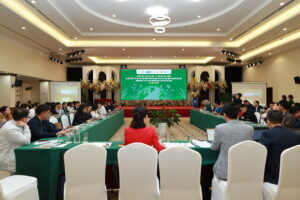
The announcement followed a recent planning event in Phu Tho province, where partners finalized an ambitious implementation plan for the next 12 months. This plan focuses on expanding and sustaining efforts to enhance community resilience across 13 communes in the three target provinces of Tuyen Quang, Quang Tri, and Phu Tho.
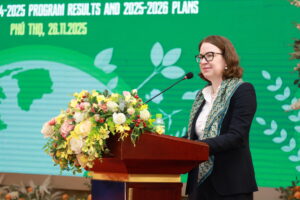
Ms. Deirdre Ní Fhallúin, the Ambassador of Ireland to Vietnam said: “The success stories in Phu Tho, Quang Tri, and Tuyen Quang demonstrate the critical importance of locally-led climate action. Ireland, through its Embassy in Hanoi, is proud to continue supporting the Resilience First program and its partners. This €1.4 million commitment reflects our dedication to safeguarding vulnerable communities against climate change and empowering ethnic minority women as leaders in their own development.”
The renewed funding will ensure the program continues its core mandate: strengthening the capacity of local authorities, supporting poor and ethnic minority communities in mountainous areas, and enhancing resilience to the immediate and long-term impacts of climate change.
Mr. Ngô Công Chính, Program Director of Plan International Vietnam, noted: “The close collaboration between Plan International, CARE, RIC, and local partners has enabled the Moving Forward program to create wide-ranging impacts – from strengthening the adaptive capacity of over 26,000 people to scaling up women-led climate-resilient livelihood models. In the next phase, we will focus on consolidating these foundations and bringing climate-smart initiatives to more communities, helping women, children, and youth become more resilient to increasing risks.”
The program’s first year has already delivered significant tangible results on the ground, driven by community ownership:
Regarding the first programmatic intervention, Commune-Level Climate Change Adaptation Capacity, the program significantly boosted climate change (CC) adaptation capacity in 15 communes across 3 provinces. Commune officials were trained in vulnerability analysis and developing CC response plans. Following this, 15 response plans were developed and deployed by the community, resulting in over 140 commune-level actions (2024–2025), benefiting 1,747 individuals (including 732 women) through training (e.g., first aid, disaster prevention for rapid response teams), equipment provision, drills, and public communication on CC, waste management, and safe shelters.
Within the design of the second pillar, Infrastructure and Capacity Building, a total of 31 vital micro-projects – including bridges, roads, water facilities, revetments, and reinforced disaster shelters – were completed through upgrading, renovation, or new construction, with 24 projects being entirely community-led to successfully transfer skills and local ownership. These infrastructure improvements are directly benefiting 11,796 residents (5,979 women, 95% ethnic minorities) by enhancing movement during extreme weather, providing safe disaster refuge, ensuring water and irrigation security, and expanding access to the national power grid. Furthermore, 247 individuals (including 62 women and 99% ethnic minorities) received crucial training in project planning and implementation, thereby embedding long-term technical capacity within the communities.
Mr. Lê Văn Hải, Director of RIC: “Results from the first year show that when communities take the lead, climate adaptation solutions become the most sustainable and relevant. From women’s groups running seedling nurseries, to farmers adjusting cropping seasons, to villages proactively monitoring infrastructure — all demonstrate the agency and creativity of local people. RIC is committed to continuing our support so that these models can be scaled up and become long-term drivers of development for ethnic minority communities.”
Also, during the 2024–2025 period, to build Safe and Climate-Resilient Schools, 32 schools were assessed and developed plans for school safety against natural disasters and climate change (CC) adaptation. A total of 92 actions were implemented across these schools to strengthen school-based disaster management boards, enhance the knowledge of teachers and students, reinforce school infrastructure for disaster resilience, and support student-led “green school” initiatives. These activities directly involved 11,303 students (5,601 female, 5,702 male, 156 with disabilities) and 808 teachers and education staff from these participating schools.
Beyond infrastructure, the program has successfully integrated Climate Adaptation into Economic Activities, with a strong focus on Women’s Empowerment. Within 12 months of implementation, the program has engaged 80 livelihood groups, trained 1,472 people (86.5% women, 96% ethnic minorities) to understand climate risks and adopt more resilient practices in farming, livestock, and ecosystem management. As a result, 64.06% of participating women surveyed confirmed they implemented at least three new knowledge-based actions to make their family’s livelihood activities more adaptive. These efforts have translated into tangible economic improvement, with 36% of all participants reporting an increase in income from adaptive livelihood activities. Beyond these efforts, 86.67% of women now report participating confidently and meaningfully in livelihood decision-making processes at the household, group, and village levels.
Commenting on the event, Ms Le Kim Dung, Country Director at CARE in Vietnam, shared: “Empowering women is an investment in community resilience. When women are equipped with knowledge and resources, they become the most powerful agents for driving local climate change adaptation solutions, ensuring communities not only survive but also thrive.”
Mr. Thái Hữu Liêu, Deputy Director of the Department of Foreign Affairs of Quảng Trị Province: “Quảng Trị is among the localities most severely affected by natural disasters and climate change… Thanks to the Resilience First program, participating communes have gradually shifted from a passive position to a more proactive one in their responses: they now have clear plans, well-trained teams, and small-scale infrastructure works directly monitored by the community. What is most valuable is that people have begun to feel tangible improvements in their daily lives — safer roads during the rainy and flood seasons, more stable sources of domestic water, and more climate-adaptive livelihoods. These results are creating essential foundations for Quảng Trị to continue moving toward sustainable development in the coming period.”
Mr. Mao Quoc Toan, Deputy Director of the Department of Foreign Affairs of Tuyen Quang Province, said: “Tuyen Quang highly appreciates how the Moving Forward program has supported the province—not only through resources, but more importantly through its community-based approach. Commune officials now have a stronger capacity, schools are safer, and women’s groups are more confident in engaging in economic activities. We hope that the new funding will continue to bring practical and meaningful changes to our people, especially in highland communes that still face many difficulties.”

This announcement of the $1.4 million fund for the Resilience First program marks a crucial and exciting new chapter. Beyond the immediate financial commitment, we are also launching the ambitious tentative implementation plan for the next 12 months, which will spread climate-smart-based initiatives across 13 communes in three provinces of Vietnam. This focused strategy will prioritize income-generating projects, the establishment of safe schools, and comprehensive climate-adaptive capacity building within these communities. We look forward to seeing this investment transform vulnerability into durable resilience, ensuring a safer and more sustainable future for everyone involved.
Please refer to the full press release here.