
On June 9-10, 2026, the Gender Responsive Equitable Agriculture and Tourism (GREAT) Program, funded by the Australian Government, together with its implementing partners, officially launched the Behavior Change for Inclusive Markets (BC4IM) sub-project in Ngoc Chien Commune and Moc Chau Town, Son La Province.
BC4IM is a sub-project under the GREAT Program, implemented from January 2026 to March 2027 across Son La and Lao Cai provinces with a total budget of more than AUD 1.16 million. The project aims to drive positive changes in attitudes, behaviours, and workplace practices to expand economic opportunities for ethnic minority women and people with disabilities within the bamboo shoot and tourism value chains.
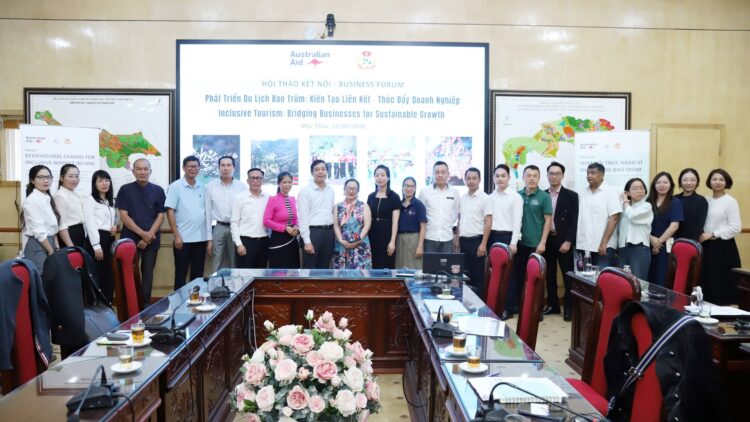
The launch event brought together representatives from local authorities, relevant government departments, cooperatives, businesses, civil society organisations, organisations of persons with disabilities, and community members from the project areas. The event provided an opportunity for stakeholders to share the project’s vision, objectives, and approach, while strengthening collaboration to promote inclusive economic development in the province.
Speaking at the event, Mr. Do Tri Dung – vice chairman of Moc Chau People Committee, highlighted that BC4IM is one of the key initiatives aimed at promoting more equitable participation of ethnic minority women and people with disabilities in local economic opportunities.
Throughout engagement in Son La, GREAT have learned that technical assistance and market support can achieve greater impact when accompanied by changes in community attitudes and behaviours. BC4IM is built on the belief that economic development can only be truly sustainable when everyone has the opportunity to participate and benefit. The project is expected to contribute to positive changes within families, communities, cooperatives, and businesses, thereby creating greater opportunities for ethnic minority women and people with disabilities to participate more actively in agriculture and tourism value chains in Son La.
According to the GREAT Program, ethnic minority women and people with disabilities continue to face significant barriers in accessing employment opportunities, participating in economic activities, and engaging in decision-making processes. Social stereotypes, unequal distribution of household responsibilities, and limited accessibility to workplaces and support services continue to constrain their ability to fully realise their potential.
Mr Nguyen Nam Phuong, the representative a tourism business in Moc Chau, participating in the event noted that demand for local human resources is increasing as community-based and experiential tourism continues to expand across Son La Province.
“The tourism industry requires not only skilled workers but also diversity in experiences, cultures, and perspectives. We believe that ethnic minority women and people with disabilities can successfully take on a wide range of roles within the tourism sector when provided with appropriate opportunities and support. We expect BC4IM to help businesses access practical solutions for building more inclusive workplaces while creating employment opportunities for groups whose potential remains underutilised.”
Through BC4IM, the project will support ethnic minority women to build confidence, strengthen their roles in production and business activities, and promote more equitable sharing of household responsibilities among family members. For people with disabilities, the project will foster more positive perceptions of their abilities and contributions while improving access to vocational training, employment, and livelihood opportunities.
According to Mr. Nguyen Van Cu, representative of the Disability Research and Capacity Development Center (DRD), one of the greatest challenges faced by people with disabilities today remains social stigma and limited access to employment opportunities.
“We believe that people with disabilities need equal opportunities to demonstrate their abilities. Through BC4IM, we look forward to working alongside local authorities, businesses, and communities to promote greater recognition of the contributions that people with disabilities can make, while supporting the development of more inclusive employment models and workplace environments. When barriers are removed, people with disabilities can become active contributors to local economic development.”
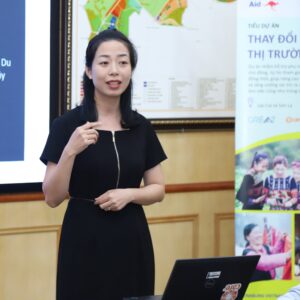
Ms. Nguyen Thi Thu Ha, Project Manager from CARE, the project implementing partner, reaffirmed that sustainable livelihood improvements must begin with changes in social norms and relationships within families and communities.
“CARE believes that ethnic minority women are not only beneficiaries of development but also agents of change. When women have a stronger voice within their families, greater access to resources, and opportunities to participate in economic decision-making, the benefits extend to entire families and communities. Through BC4IM, we aim to foster positive change from within local communities so that women and people with disabilities can participate actively, confidently, and equitably in economic activities.”
Throughout its implementation period, the project will focus on four key areas:
- Promoting family and community support for ethnic minority women through communication activities, dialogue, and the promotion of positive role models on gender equality.
- Strengthening inclusive governance capacities of bamboo shoot cooperatives, enabling ethnic minority women to take on greater leadership roles and participate more actively in decision-making processes.
- Raising community awareness of the rights, capabilities, and contributions of people with disabilities while connecting them to vocational training and employment opportunities.
- Supporting cooperatives and businesses to improve recruitment practices and workplace environments, making them more accessible, inclusive, and disability-friendly.
Through its behaviour change and inclusive market development approach, BC4IM is expected to contribute to sustainable transformation within the local economic ecosystem, where ethnic minority women and people with disabilities can participate actively, equitably, and realise their full potential.
BC4IM is implemented in partnership with Clickable Vietnam, REACH, the Disability Research and Capacity Development Center (DRD), and Lao Cai College.
Please refer to the full press release here.